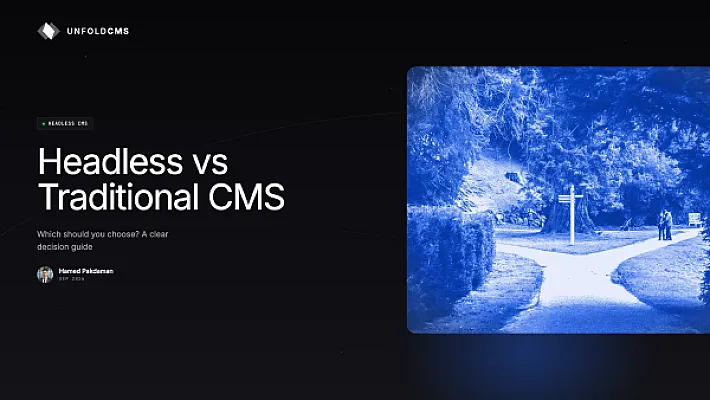
Headless vs Traditional CMS: Which Should You Choose?
A decision guide for headless vs traditional CMS: when each wins, the tradeoffs, and a simple five-question framework to pick the right one.
Open source vs proprietary CMS, compared honestly: cost shape, data ownership, lock-in, and customization. Which model fits your team.
A git-based CMS stores content as files in a Git repo instead of a database. How it works, the real tradeoffs, and when to choose one over a database CMS.
Directus is a great database-to-API platform, but the heavy admin, Node hosting, and BSL license send teams looking. Here are 5 honest alternatives for 2026.
Most 'best headless CMS' lists rank by funding. This one ranks by run cost, ownership, and ops — including the $0/month self-hosted options.
Payload needs a Node server, a build step, and real RAM. Here are the best self-hostable alternatives in 2026 — Strapi, Directus, KeystoneJS, and the no-Node outlier — ranked by deploy pain.
A status page must stay up when your app is down, which means separate infrastructure.
A link-in-bio page is one simple page — the only question is whether you rent it or own it.
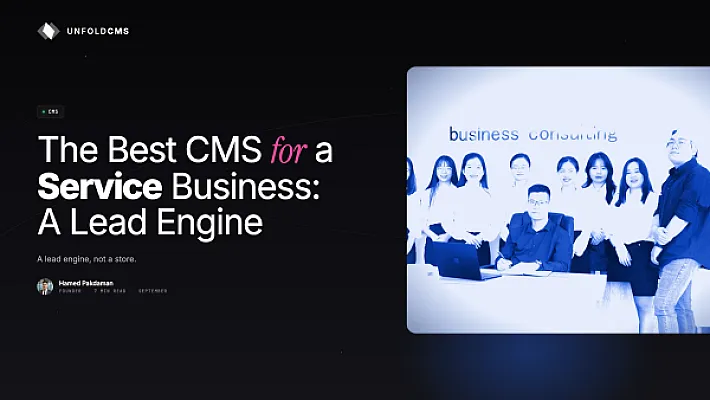
A service business site is a lead engine — service pages, trust content, lead capture, and SEO.
A local business site needs to be simple, cheap, editable, and findable.
A publisher runs a content factory where the CMS either helps or taxes the business.
A waitlist page needs a fast landing page, email capture, confirmation, and an owned list.