WordPress Alternatives in 2026: A Developer and Business Guide
The pillar guide to WordPress alternatives in 2026 — 10 platforms, decision framework, and when to stay on WP.
Blog
Explore our latest articles, tutorials, and insights.
The pillar guide to WordPress alternatives in 2026 — 10 platforms, decision framework, and when to stay on WP.
A head-to-head architectural comparison of headless vs traditional CMS — what each one is, where the real differences come from, and how to decide for your project.
The 2026 reference guide for developers picking a CMS — six criteria that actually matter and ten platforms ranked.
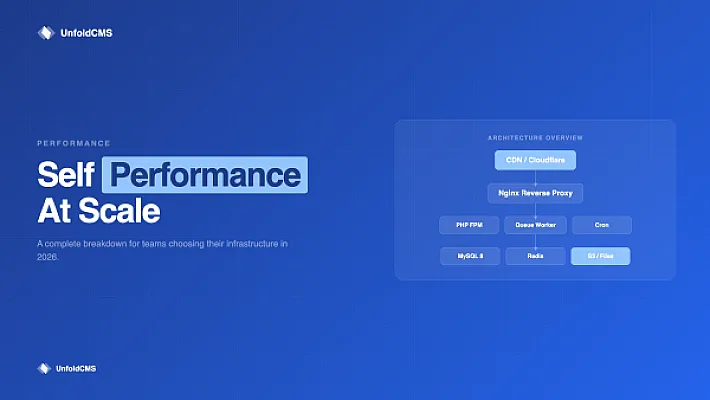
A methodology guide for technical evaluators benchmarking CMS performance — what to measure, the 5 scenarios that matter, and how to compare fairly.
When to self-host, what it costs, and which CMS to pick — the 2026 guide.
WordPress is free, but production WordPress is not. The 5 hidden costs and the real 3-year TCO for small, mid-size, and enterprise sites.
Why WordPress sites are slow in 2026 — the 5 main bottlenecks, how to diagnose each, what fixes actually work, and when switching CMSes is cheaper.
The average WordPress site runs 25 plugins. Each one is third-party code with database access. Here is what it actually costs you and when to switch.
Half of CMS bugs come from drifted types. The case for TypeScript-first CMSes — what end-to-end type safety means, who delivers it, and how to test it.
A 10-point evaluation framework for choosing a headless CMS in 2026 — with how to test each item, red flags, and what good looks like in practice.
Self-hosting your CMS collapses your DPA stack, removes Schrems II concerns, and makes GDPR erasure trivial. The compliance case for owning your CMS in 2026.
Self-hosted CMS wins for reasons that have nothing to do with cost. The five benefits that compound over a 3-year project — and the cases where SaaS still wins.